Lavette
PROMO


Emo
Audience Profile
Introduction

This document is about emo's. The reason I am writing this document is to tell you more emo's and what they like. The youth group I am studying is emo's. Emo is a musical genre that stands for "emotive hardcore." The genre first started in the middle of the 1980s, taking the musical sounds of hardcore punk and post-hardcore and combining them with sad and sensitive lyricism (words) that emo has become so well known for. Other names are emotional, hardcore and emocore. An emo person tends to be quiet, introspective or shy, and they usually wear dark clothes. They can also be very creative and lean towards people who have similar interests like them.
Media consumption refers to the amount of information and entertainment consumed by an individual or organisation. It includes activities such as what type of social media we use, what type of books and magazines we read, what type of films and videos we are interested in and what type of music we listen to. If i would make a film or video for a specific audience I would find out what type of media consumption they take and utilise it in my video.
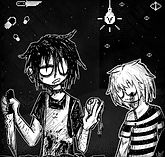
The movies and shows emo's are interested in are dark-witted ones eg: Jennifer's Body (2009), The Craft (1996), Tim Burton films, and Tokyo Ghoul and Death Note which are both animes. They often play a-lot of games that have a sinister and eerie vibe to them, like Silent Hill, Fatal Frame and Resident Evil. They would also enjoy playing Final Fantasy as the characters have a goth-like image and it's a fighting game.
What is media consumption?


Emo's musical Tastes and Preferred Artists
Emo's usually listen to alternative rock, indie rock, punk rock and pop punk. The biggest bands to pioneer the emo subculture were Rites of Spring and Embrace, the more modern bands are: My Chemical Romance, Dashboard Confessional, Fall Out Boy, Taking Back Sunday, and Panic at the Disco.
My Chemical Romance is one of the most influential and popular rock bands of the early 2000s, becoming the face of the emo rock genre. They were formed on September 12, 2001, and have won numerous awards. For example: They won Best Album for their album "Three Cheers for Sweet Revenge" in 2005, Best International Band in 2006, and Best Video for their music video "Na Na Na (Na Na Na Na Na Na Na Na Na)" won in 2011. They've helped popularize the emo style of music.


Hobbies/ Interest's
Emo's subcultures value art and expressing themselves through paintings, making music, and writing. Emos enjoy these hobbies because it helps them channel their emotions into their creative pursuits and use their art as a form of therapy and self-discovery.



Magazines, Radio shows and websites
Emo magazines include information about bands, clothing, and other topics related to emos. Magazinesdirect.com sells a magazine called "The Story of Emo's". It's a 132-page magazine that discusses the lives of key emo bands, complimenting their songs, albums, and people who worked with them behind the scenes, such as staff members.
Radio Shows
There are still many radio shows that continue to air emo broadcasts and songs. For example, Acuu Radios plays emo songs from My Chemical Romance, Rite of Spring, Algernon Cadwallader, and more. Hellorayo and live365 also feature emo songs, as well BBC, which recently aired a broadcast called "Everything is Emo" with Hayley Williams as the host.
Websites/blogs
There are numerous emo blogs available that provide information about emo songs and the history of emo culture. Many of these blogs are written by people who are or were emos and discuss their experiences with it. Sophiesfloorboard.blogspot.com is an emo blog that discusses emo culture, emo songs, and her personal experience being an emo. In addition, fourfa.com provides information about emo fashion, its history, and the various styles of emo music.




Fashion
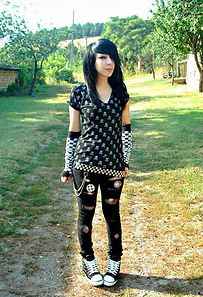
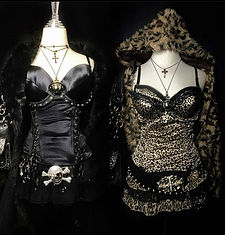
Emo fashion typically consists of narrow jeans, black eyeliner, tight t-shirts featuring band names, studded belts and straight jet-black hair with long bangs. The colour palette is a crucial aspect of Emo fashion. Emo style is generally associated with dark and sombre colours for example: black, deep purple, blue, grey, and pink colours. These colours help create a sense of mystery and melancholy, which are characteristic of the Emo subculture.
Brands
There are many emo brands, like Killstar, Banned Appeal, Jawbreaker, Spiral Direct, and Burleska Limited. Each brand sells different types of emo clothing. Killstar, for example, creates beautiful black and mystical-themed fashion for women and men, whilst Burleska Limited sells high-quality corsets, skirts, corset dresses, and jackets. Similarly with Spiral Direct and Jawbreaker, Spiral Direct sells a lot of metal-related clothes, whereas Jawbreaker sells more gothic clothes.
summary
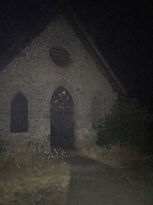
Based on my research, if I were to make a film targeted towards emos, I would use dark, gloomy lighting to create an ominous and sinister atmosphere. The setting would most likely be in a cemetery or an abandoned house to build tension in the film. The characters would wear a lot of black gothic clothing, tight skinny jeans, and striped tops and skirts. I'd incorporate ghostly characters and creepy decorations, such as fake bloody knives, frightening Halloween masks, and fake cobwebs.
The background music would be eerie and unpleasant music to make the viewers feel unsettled. I would blur parts of the set and apply special effects, such as making the ghosts' faces more realistic to scare the audience. I would enhance the audio for stabbings, slashing, and other flesh wound sounds to make the viewers feel uncomfortable. The characters in my film would be troubled teenagers, and they would either be investigating a haunted house or attempting to contact with the supernatural.




Interview Questions
For our primary report, we had to ask one of our classmates a series of questions about their hobbies and interests. The person I was interviewing was ShaKai.


What's your favourite film? Shakai expresses he likes Captain America. If I were to make a promo carted towards him, it would have a superhero theme.
What fashion style are you interested in? He prefers Nike clothes, in my promo I'd have people dressed in Nike Techs or other Nike clothes,
Favourite school subject? Shakai claims his favourite subject is IT. In my promo, I would have people who are interested in IT.
How old are you? Shakai is 18 years old in my promo i would have people around the same age range as him and not people older.
Do you like gaming? Shakai enjoys games; in my promo I would have people playing games, most likely super hero games as he enjoys super hero movies.
What do you do in your spare time? Shakai says he likes napping in his spare time, thus my promo would be in a relax setting.
What type of music genre do you listen to? Shakai claims he enjoys R&B music. If I were to create a promo for him, I would utilise R&B music. For examples include Tevin Campbell's "Can We Talk" or Monica's "The Boy Is Mine."
Summary
ShaKai enjoys superhero films. If I were to create a movie for him, I would utilise powerful lights and flashes to make the film dramatic and entertaining. The background music would range from loud and suspenseful sounds to calm and peaceful ones, depending on the shot; I would also include some R&B music in the film as he mentioned he likes them. The shot and editing style would be fast-paced, and I would employ a lot of visual effects to enhance the characters' powers and make them appear cool. The protagonist in my film would be a superhero who is trying to save the day from the antagonist, a villain who opposes the hero.
The superhero will have a sidekick to help him defeat the villain. The film will have a lot of action, therefore it will require a lot of technology, such as wires to make the actors fly, stunt doubles to perform physical acts like punching or falling on the ground, and artificial rain machines to make it rain on cue. The plot would be set in an urban city, such as New York, and will follow the hero's origin story. My film's protagonist would be 18 years old, and his characteristics would include playing video games and napping. He would frequently wear Nike techs as well, since ShaKai mentioned he likes all of these.

Comparison report
Introduction
I am writing a comparison report that is based on my primary interview and secondary internet research. Primary research involves gathering information firsthand, such as from a teacher or an acquaintance, while secondary research is obtained from another source, such as the internet or a newspaper.
Depth
In my opinion, secondary data provided greater depth than primary data. This is because, unlike my primary interview, for my secondary research I was able to research all the information I wanted to know and had access to a variety of different sources. Like Google, Wikipedia, and even Reddit. Whereas for my primary interview, my questions were limited and did not cover all of the facts I wanted to know about the person I was interviewing. Furthermore, the person you're interviewing may deliver bland answers with little information to extract from.
Ease
It is generally easier to obtain secondary data than primary data. This is because secondary data can be accessed from a variety of sources such as the internet and newspapers. Whereas collecting primary data, you will need to create a questionnaire and find people to interview, which can be longer and more stressful than getting secondary data.
The cost of collecting primary data is higher than secondary data. This is because, with primary data, you will need to find people to conduct interviews and pay them. Additionally, you will have to cover the expenses for all the resources needed for the interview. On the other hand, secondary data is obtained secondhand and does not require any payment.
Accuracy/Reliability
Primary data is a more reliable way to collect information than secondary data. This is because primary data is obtained directly from the source, making it first-hand information. On the other hand, secondary data is obtained from other sources and may be false or inaccurate."
Summary
I was better at gathering secondary data than primary data. This is because secondary data was more accessible and quicker to find than primary data. I was able to research everything I wanted to know about emos and include it in my report. Whereas for my primary interview, I could only ask 7 questions and some of the responses were dull and difficult, to extract further information to include in my report.

Socio Economic
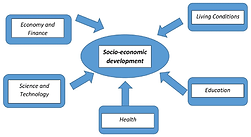
Socioeconomic data refers to information about both social and economic factors. It is used to assess an individual's health, financial well-being, and social background. This method of data collection would be primary. Individuals are categorized based on their household income and education. Understanding people's income provides insight into their financial well-being, while education levels can help to gauge the overall skills and knowledge of the population.
Socioeconomic status is often divided into three levels: high, middle, and low. Its aim is to categorize the different levels that a family or individual may belong to. By assigning someone to one of these groups, you can then evaluate their income, education, and occupation.
VALS
VALS stands for Values, Attitudes, and Lifestyles. It was developed by the Stanford Research Institute, a consulting organization in the United States, as a marketing and advertising research tool. Companies can effectively promote their products and services by categorizing their target audience using VALS.


Alternative audience profile : Shoujo culture
Shoujo culture is a cultural phenomenon in Japan that focuses on young girls and women. This culture values romance, friendship, and personal growth. It revolves around a lifestyle that celebrates being extremely girly and cute.
Media Consumptions
The word "shoujo" means "girl" in Japanese. Many female Japanese writers create shoujo mangas, which are targeted towards teen girls and focus on personal and romantic relationships. Most shoujo mangas/animes are set in high school and follow the female protagonist into adulthood. In these stories, the female protagonist often struggles with romance and friendships, and viewers witness the characters' personal development throughout the show.
Some examples of shoujo animes/mangas are: "Nana" (which I have read) written by Ai Yazawa, a well-known shoujo manga artist. "Fruits Basket" by Natsuki Takaya, "Ao Haru Ride" by Io Sakisaka, "Peach Girl" by Miwa Ueda, and "Sailor Moon" by Naoko Takeuchi, a very popular anime that has inspired many other anime series.


Shoujo Fashion : Himekaji gyaru


Shoujo culture is gaining alot of popularity worldwide, as many people who relate to shoujo characters are inspired by their style and have started to dress like them. The style is known as "Himekaji," a hyperfeminine Gyaru substyle in Japan. "Hime" means princess, and "kaji" means casual in Japanese. In Japan, this term refers to the casual style of clothes worn by "princesses" or wealthier teen girls. The outfits usually feature soft, pastel colours like pink, white, cream and light blue. Many people enjoy wearing himekaji because it brings out their feminine and girly side.


Hairstyles
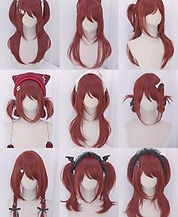
Shoujo hairstyles, as seen in anime, manga, and other media aimed at young girls, are characterized by their, elegance and ability to express personalities. These hairstyles often reflect the character's emotional depth and uniqueness and are heavily accessorised with clips and hairbands.
Some common hairstyles are:
Long, flowing Hair- These hairstyles' are long, silky hair and are often associated with graceful or romantic characters. They symbolize femininity, grace, and innocence.
Twin Tails (pigtails)- Pigtails are normally used to represent lively, energetic, and youthful characters, they're often seen as immature and playful.
Lose curls/waves- Wavy or curly hair often signifies a free-spirited or emotional character, they are often portrayed as effortlessly beautiful.
Short, boyish haircuts- Short hairstyles are frequently used to represent strong, independent female characters. They represent confidence, boldness and a more carefree or rebellious attitude
Coloured hair- Coloured hair uasally represents a character's unique personality and self-awareness. The character is usually very outgoing and loves herself.


Nicola magazines


Magazines & Websites
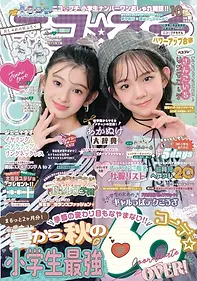
There are many shoujo/girl magazines in Japan. These magazines are targeted towards young girls from the age of 13 to 18. They discuss Japan's latest teen fashion trends, how to get cute shoujo hairstyles and makeup, and other necessities like skincare products, purses, shoes, water bottles, key chains, and more.
Many companies in Japan produce these shoujo magazines, two of which are named Nicola and Nico Puchi. Nicola is a fashion magazine published in Japan by Shinchosha in 1997. The magazine targets young girls aged 13 to 17 and is well-known for its models called "Nicomo". These models are aged between 12 to 16 years old and are chosen through an audition held every autumn in Japan. The models are expected to quit the magazine before entering the second grade of high school, and a graduation ceremony is given to them in Tokyo. With the growing popularity of teen fashion and its models, Nicola became the best-selling fashion magazine for teenage girls, with a circulation of over 231,000 a month.
Nico Puchi is produced by the same company that made Nicola. In 2006, the company debuted a magazine version of Nicola called Nico Puchi. It is aimed at elementary school girls and is more modern than Nicola. Nowadays, it's one of the most popular shoujo magazines in Japan.
Websites
As well as magazines both Nicola and Nicho Puchi have official websites. Nicola's website is called nicola.jp and Nicho Puchi's website is nicopuchi.jp.
Nico Puchi
Nico Puchi's website is a great resource for learning about shoujo culture and what it means to be a "shoujo girl". The website is very girlie and provides extensive information on fashion, cosmetics, lifestyles, entertainment and more. Additionally, it features blogs from its models discussing their lives and events they have attended.
Nicola
Nicola's website is less informative than Nico Puchi's, but it also talks about fashion and beauty trends that are occurring in Japan as well as their latest magazine release.
nicopuchi.jp

nicola.jp

Nico Puchi magazines




Musical taste and preferred artist
Many songs can be classified as "shoujo" music. Shoujo songs typically sing about romance and have heartfelt and emotional lyrics. The songs often explore the feelings of love and innocence with soft, light and catchy melodies that include pianos and strings. Japanese songs and some Western songs can be classified as shoujo music. Some Western songs include "Airplane Mode" by Limbo, "A New Kind of Love" by Frou Frou, "Show Me How" by Men I Trust and "Duvet" by Bôa. Some Japanese songs include "Like A Raspberry" by Uchuu Nekoko, "For Lovers" by Lamp, "Dawn In The Adan" by Ichiko Aoba and "Ikinokori Bokura" by Ichiko Aoba.
Shoujo music in animes
Shoujo animes have ost (Original Soundtrack), these soundtracks can be used for the show's intro and outro songs or even be played throughout the anime in the background. Depending on the anime, shoujo songs can be emotional and sad or bright and upbeat however, both songs will still be about love.♥Lonely in Gorgeous♥ by Tomoko Kawase and "Kimi ni Todoke" by Tomofumi Tanizawa are perfect examples of this. Both songs sound very different but still sing about love.
Lonely in Gorgeous was the opening for the shoujo anime "Paradise Kiss" written by Ai Yazawa, the same author who wrote Nana as mentioned previously. Similarly, with kimi ni Todoke (from me to you) which was also the opening for the anime "kimi ni Todoke" which was written by Karuho Shiina


Summary
From the research I have done, if I was to make a film aimed at a shoujo audience, my film would be about romance and personal development making it a coming-of-age film. My film would use soft and natural lighting from places like parks, schools or quiet urban towns, to evoke a serene atmosphere. The shots and editing style would be slow past and natural with no visual effects, making the film feel more realistic and relatable to viewers. The location of my film would most likely be in a school setting in Japan, following a female protagonist. The viewers would follow the female protagonist as she navigates through friendships and relationships, and finding her own identity. As a result, slow-pitch shots are required to depict the character's growth throughout my film.
Fashion would be a major aspect of my film, as it would symbolize the character's personality, social status and growth throughout the film, they would typically be "Himekaji" outfits. As well as outfits, hairstyles would also be a major part of my film as it's a big part of shoujo culture. The soundtrack would feature slow and soft melodies that talk about love.