Experiments & Annotations

Spike Lee
Shelton Jackson known as Spike Lee was born on March 20 1957 in Atlanta Georgia. He is 67 years old and is a renowned filmmaker, producer, actor and screenwriter. He started film-making in 1896 with his debut movie "She's Gotta Have It" produced by his own company "40 Acres and a Mule Film-works", which was founded in 1979 by him and Monty Ross. Many of Spike Lee's films are about race and issues within the black community he tells stories about urban crimes, poverty and political issues that affect the black community. His most well-known films about the black community are: Malcolm X, BlacKkKlansman, He Got Game, Chi-Raq and Da 5 Bloods. Spike Lee has won and been nominated for many academy awards like: Best Writing Adapted Screenplay for his film BlacKkKlansman, he won Academy Honorary Award and an Independent Spirit Award for Best First Feature for his film She's Gotta Have It.

Visual style & Motif
↓
visual style 1- Double dolly
What is a Double Dolly? A double dolly is a special type of dolly that was popularised by Spike Lee and became his signature shot style. A double dolly is different than a normal dolly shot as it involves a dolly set up with the camera and camera operator on one dolly, with the addition of an actor placed directly across from the camera either on the same dolly platform or a separate dolly.
Spike Lee uses a double dolly shot to create a dreamlike, floating effect emphasising the character's emotional state. Three films with the best double dolly shot are: Mo’ Better Blues, Malcolm X and BlacKkKlansman.
Spike Lee uses a double shot in "Mo’ Better Blues" when his character Giant is moving towards a person whom he has unsettled debts with and shows the character Giant floating away once he's seen him. Similarly in "Malcolm X" there's a double dolly shot on Malcolm X's face when he's about to meet his death and in "BlacKkKlansman" there's a double dolly shot when the protagonist (Ron Stallworth) and his love interest (Patrice) glide down the hallway.
Visual style 2- Close up
Spike Lee, uses close-ups like most film-makers to draw the audiences
attention to the characters' emotions and thoughts, making the scenes more personal and intense. Three Spike Lee films with close-ups are: "Do the Right Thing", "Malcolm X" and "25th Hour". In "Do the Right Thing" there is a close-up of the character Radio Raheem as he delivers a monologue showcasing his intensity and ideologies. In "Malcolm X" there's a close of Malcolm x himself right before his assassination showcasing a sense of calmness and fate. Implying that Malcolm X wasn't afraid of death. Lastly, 25th Hour" there's a close-up of the character Monty as he looks at the mirror and berates himself showcasing a sense of confusion and self-loathing.
Visual style 3- Canted (Dutch) angle
A canted angle shot is when a camera is tilted at a certain angle making the scenes appear slanted or horizontal. Spike Lee uses canted shots in his films to make the scenes feel uneasy and to create tension within the films. Three films where he does this are: "Do The Right Thing", "Clockers" and "Inside Man". In "Do The Right Thing" there's a canted angle with characters Bugging out and Sol during their argument showcasing tension. In "Clockers" there is a titled shot of the character Strike, emphasising his paranoia and uneasiness during the scene. Lastly, in "Inside Man" there's a canted angle during the heist scene, creating a feeling of chaos and disorder.
visual style 4- Breaking The Fourth WALL
Many of Spike Lee's films have characters looking directly at the camera addressing the audience. This technique makes the audience feel exposed and confronted forcing them to engage directly with the film. Three films where he does his best are: "Do The Right Thing", "Malcolm X" and "25th Hour". In "Do The Right Thing" characters Mookie and Pino directly address the camera in a racial slur montage, confronting the viewers. In "Malcolm X" Malcolm X looks directly at the camera during his speeches, engaging the viewers as if their in the crowd. Lastly, in "25th Hour" One of the characters "Monty" stares into the camera during a monologue making the audience feel involved in his rant.
visual style 5- colour
Spike Lee uses bold exaggerated colours to evoke emotions and tell the story of the film. For example in "Do The Right The Thing" he used warm hues of red, orange and yellow colours to emphasise the heat and tension of the film. Similarly, with "Mo Better Blues" Spike Lee used neon lighting and rich blue & purple colours to emphasise the jazz atmosphere in the film. Lastly in "School Dazed" Spike Lee contrasts between bold and vibrant colours to highlight the different social groups in the school.
visual style 6- High and Low angles
Spike Lee uses a lot of high and low angles in his films to show the power dynamics between characters or vulnerability. A low-angle shot can make a character appear more dominant as they're looking down making them seem godlike or powerful. While a high angle shot can a character seem small or powerless bringing their vulnerability to show while they're looking up. Three films that Spike Lee does this for are: "Malcolm X", "Do The Right Thing" and "Inside Man". In "Malcolm X" there's a low angle on him while is he doing his speech to show his authority and influence. In "Do The Right Thing" there's a low angle on the character Radio Raheem to make him look powerful and high angles on the others to show their intimidation. Lastly, in "Inside Man" there are high angles on the hostages making them look vulnerable, while there are low angles on the robbers to show their dominance.
visual style 7- SLOw TRACKING SHOTS
In films, many filmmakers use slow tracking shots to engage the viewers by making them watch the film more attentively focusing on what the director wants them to. Spike Lee uses slow tracking shots to build tension and engage the audience in the characters, emphasising important moments in the characters life drawing the viewers deeper into the story. Three Spike Lee films that use slow tracking are: "Do The Right Thing", "Malcolm X" and "25th Hour". In "Do The Right Thing" there's a slow tracking shot that follows a character named Mookie walking through a neighbourhood, showcasing the environment to the audience. In "Malcolm X" there's a slow tracking shot following Malcolm as he walks to his assassination, building up tension and making the audience nervous. Finally, in "25th Hour" there's a slow tracking shot that moves with Monty and his father in the car, suggesting the weight Monty has for the possible future.
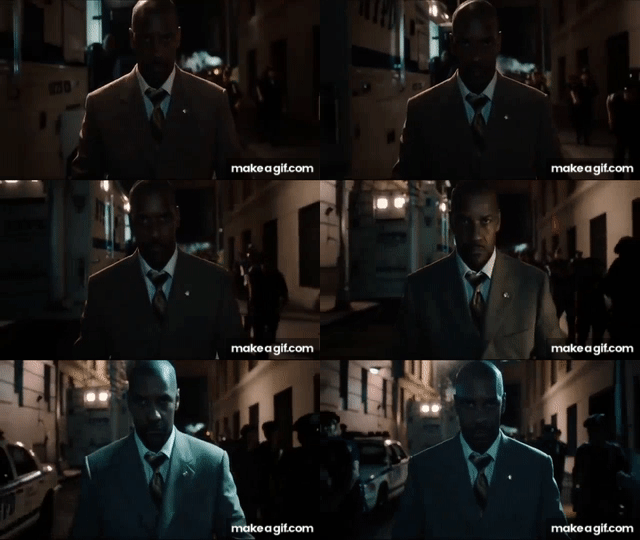
Inside Man (double dolly)
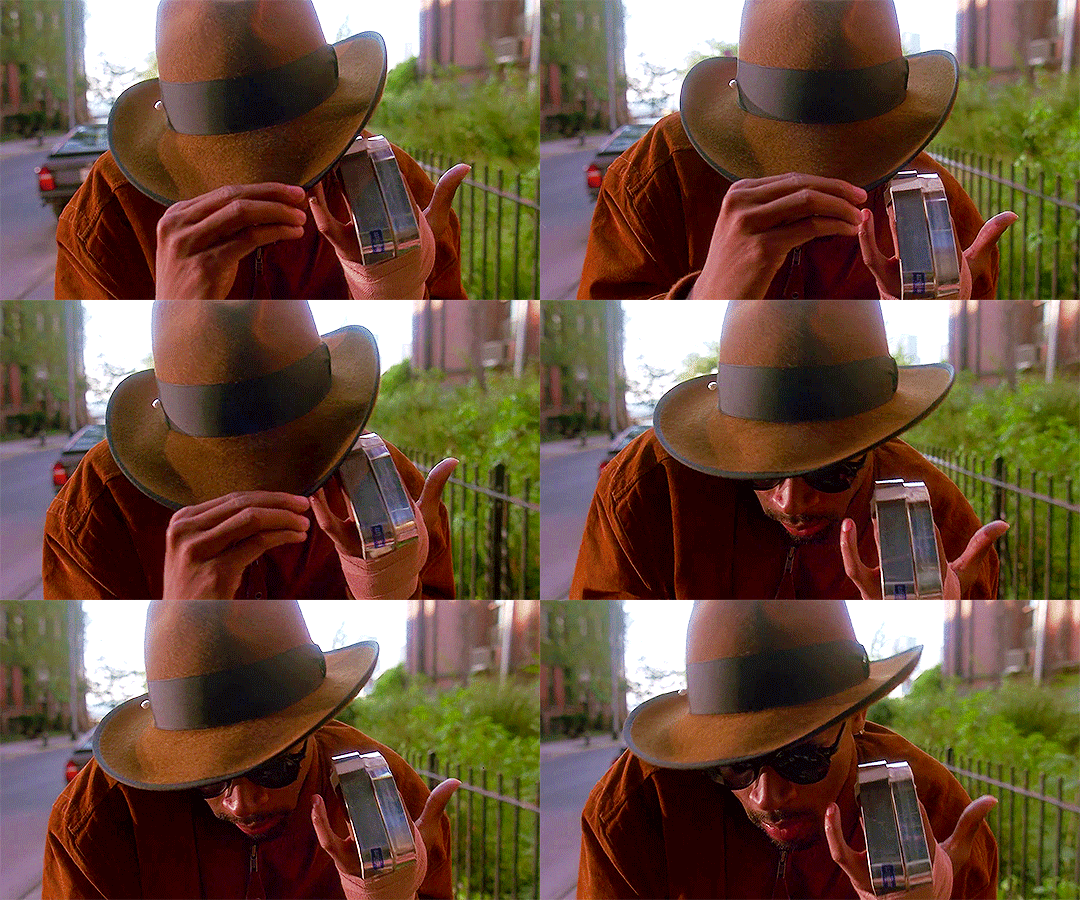
Mo’ Better Blues (double dolly)


Chi-raq
BlacKkKlansman
Malcolm x
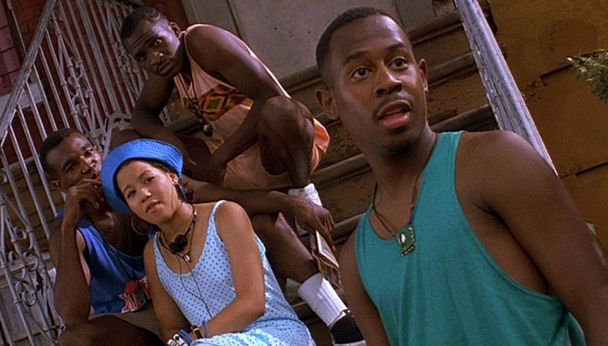

Do the right thing
Do the right thing


Do the right thing
Do the right thing


Do the right thing
BlacKkKlansman


Do the right thing (Low angle)
Do the right thing (Low angle)
Tracking shots

Spike Lee Double Dolly experiments
What is a double dolly? A double dolly is placing a subject on a dolly track that allows the camera to follow the subject as it moves at the same pace as the dolly cart.
How did you create a double dolly? I created the double dolly by using two tracks and taping them to the wheels. I then placed a board on top of the two tracks and set a chair on the board, for the subject to sit in while we recorded them. During the recording, the subject held a phone to display their face and shoulders, while someone behind them pushed the chair to create movement.
What helped enhance my moving camera shots? My teammates helped me improve my camera shots as I sat on the chair while they pushed it. Because the movement was steady and smooth, my camera shots were also steady and smooth.
What shots do you like and why? The shots I like most are the first and second ones. I prefer these shots because of their smooth movement and focus on the subject, avoiding distractions from other elements.
How could you improve on the shots you are not so keen on? The shot I'm not too fond of is the last shot because you can see the person behind pushing the chair. To improve this, I would recommend double-checking my shots and redoing them if the person is visible in the background.